




Missing teeth can affect more than your ability to chew or smile comfortably. Over time, tooth loss can contribute to changes in your jawbone and facial appearance, sometimes making your cheeks look sunken or your lips appear less full. All-on-X implant dentures may help restore some of that lost facial support while replacing an entire arch of missing teeth. However, the results depend on several factors, including your bone structure and how much it has changed since losing your teeth.
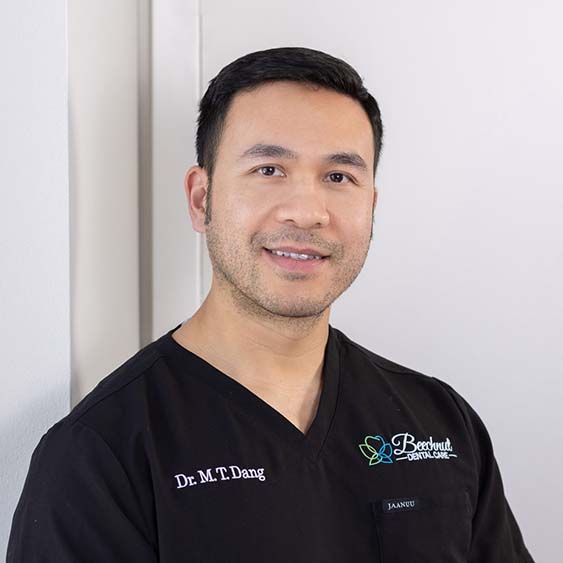
At Beechnut Dental Care, Dr. Mitch Dang and our team help patients explore dental implants based on their oral health and treatment goals. We’ll explain how missing teeth can change your facial appearance, what All-on-X implants may help restore, and what to consider when deciding if this treatment is right for you.
Why Missing Teeth Can Change Your Facial Shape
Your tooth roots play an important role in maintaining the jawbone. When a tooth is lost, the bone that once supported it gradually begins to shrink because it no longer receives the same stimulation from chewing. A 2023 systematic review prepared for an International Team for Implantology consensus conference explains that the jawbone loses height and width following tooth extraction. Conventional dentures may also contribute to changes in the underlying bone over time, potentially affecting their fit.
As the jawbone loses volume, it can change the way your face looks. Your cheeks may appear less full, your lips may lose some support, or the lower part of your face may look shorter. These changes usually happen gradually, and their extent varies from person to person. Addressing missing teeth earlier may help preserve more treatment options, especially if you’re considering dental implants.
What Implant-Supported Teeth May and May Not Do
All-on-X treatment uses several dental implants to support a full arch of replacement teeth. As with other implant restorations, the goal is to restore a stable bite while improving how your teeth look and function. Research suggests implant-supported dentures may offer certain benefits over traditional dentures, although their long-term effects on jawbone loss are still being studied. Some potential advantages include:
- A more secure fit: Implant-supported teeth are anchored in the jaw, so they’re less likely to shift or slip while eating or speaking.
- Improved chewing ability: Implant-supported dentures can provide greater biting force than conventional dentures, making it easier to enjoy a wider variety of foods.
- Better chewing muscle function: Some research suggests implants may help maintain the muscles involved in chewing.
- More facial support: Replacing missing teeth can help support your lips and cheeks, potentially improving a sunken appearance.
While dental implants can improve your bite and restore some facial support, they cannot reverse every change caused by tooth loss. The results depend on your existing bone structure and individual needs. If you’re missing only one tooth, a single-tooth implant may be a more appropriate option than a full-arch restoration.
How We Plan Implant Treatment
Before recommending dental implants, we take a close look at your teeth, gums, and jawbone to understand what treatment might involve. A CBCT 3D X-ray provides a detailed view of your jawbone, helping us determine where implants can be placed and whether there’s enough bone to support them. We’ll go over what we find and discuss the options that make sense for you.
Dr. Mitch Dang also combines 3D imaging with an intraoral scan to plan guided implant surgery. This allows him to plan implant placement in advance and may make the procedure less invasive. We’ll also review your medical history and gum health, as well as any concerns you have about the procedure. You’ll have a chance to ask about healing time, costs, and anything else you’d like to know before deciding how to proceed.
Questions to Ask Before You Decide
Choosing an implant option is a big decision, so ask questions until you feel comfortable. Ask how many implants your plan may need, how long healing could take, what your final teeth will look like, and whether your bone is thick enough or bone grafting may be worth discussing. Your answers may depend on your bone, your overall health, and the teeth you still have.
It’s also worth discussing how to care for your implants after treatment. Although implant-supported teeth can’t develop cavities, the surrounding gums and bone still need attention. Daily cleaning and regular dental visits help keep the tissues around your implants healthy. We’ll explain what maintenance involves so you can decide if this treatment is right for you.
Give Your Smile the Support It Deserves at Beechnut Dental Care
Missing teeth can affect how you feel about your smile, but there may be options to restore its appearance and function. At Beechnut Dental Care, Dr. Mitch Dang and our team take the time to understand your concerns, assess your oral health, and explain which implant treatments may be right for you. We’re happy to answer your questions about bone loss, recovery, and what you can expect from the process.
We accept many dental insurance plans, including Delta Dental, Cigna, and MetLife. Cherry financing and an in-house membership plan are also available, giving you different ways to manage the cost of care. If you’re considering dental implants, contact our office to schedule a consultation. We’d be happy to talk through your options and help you decide what makes sense for you.
