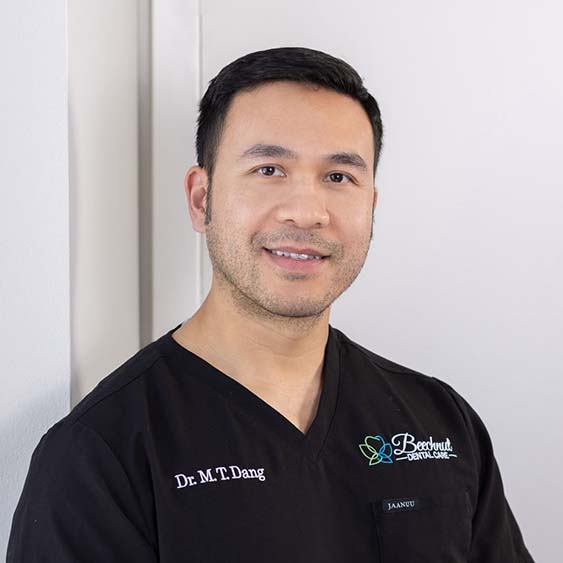
 Medically reviewed by Dr. Mitch Dang, DDS
No insurance, no problem! Ask us about our in-house plan
Losing a single tooth changes more than your smile. It shifts how you chew, puts stress on neighboring teeth, and allows the jawbone beneath the gap to slowly shrink over time. A removable partial or a dental bridge can fill the space visually, but neither option addresses what’s happening below the gumline. A single tooth implant goes further; it replaces the root itself, preserving the bone and giving you a restoration that feels and functions like a natural tooth.
At Beechnut Dental Care, Dr. Mitch Dang brings a level of detail to implant treatment that sets this office apart. A graduate of the University of Texas Health Science Center, Houston, and recipient of the Hanau Best of the Best Award of Excellence in Prosthodontics, Dr. Dang approaches single tooth replacement with the same precision he applies to full-mouth care. If you’re weighing your dental implant options in Houston, this page will walk you through exactly what to expect.

Quality dental care should fit your budget. We accept most major insurance plans and offer flexible financing options to make your treatment affordable. Whether you need a routine cleaning or comprehensive dental work, we'll work with you to find a payment plan that fits your needs. Monthly payment options start as low as $99 for many procedures.
A single tooth implant is a three-part restoration: a titanium post placed into the jawbone, an abutment that connects to that post, and a custom crown that sits on top. Together, these components replicate the structure of a natural tooth from root to tip. Unlike a bridge, which requires grinding down adjacent healthy teeth to support the replacement, a single implant stands entirely on its own.
The crown is matched to the color, shape, and size of your surrounding teeth, so the final result blends in rather than standing out. Once placed and healed, patients typically report that their implant feels indistinguishable from their natural dentition.
Most tooth replacement options work at the surface level; they restore what you see. What they don’t do is stimulate the jawbone the way a natural root does. When a tooth is lost, and the root is gone, the bone in that area no longer receives the mechanical signals it needs to maintain its density. Over months and years, it begins to resorb. This bone loss can change the shape of your face, make future tooth replacement more difficult, and weaken the support structure for neighboring teeth.
A titanium implant post fuses with the surrounding bone through a process called osseointegration. This fusion allows the implant to act as a functional root, transmitting chewing forces into the jaw and keeping that bone active. Research published in the PMC-indexed systematic review of single immediate implants found success rates ranging from 96.7% to 100% across multiple clinical trials, reflecting strong and consistent long-term outcomes for patients.
Planning is where this office separates itself from a standard dental experience. Dr. Dang uses CBCT cone beam imaging to create a three-dimensional map of your jawbone before treatment begins. This scan shows bone density, height, and the exact position of nerves and adjacent roots, all of which inform where and how the implant post is placed. Guided implant planning eliminates much of the guesswork and increases precision at every stage.
The process unfolds in a sequence that’s designed around your comfort and your biology. After the post is placed and the bone has integrated, we attach the abutment and fabricate your custom dental crown. The crown is crafted to match your surrounding teeth in every detail. The result is a restoration that functions the way your original tooth did.
During your consultation, we’ll help determine which restoration option best suits your oral health needs and lifestyle preferences.
Dr. Dang’s background in prosthodontics informs how he thinks about tooth replacement at every level. His prosthodontics-level care means that the crown placed over your implant is evaluated not just for how it looks, but for how it fits into your overall bite, your jaw movement, and the long-term health of your surrounding teeth. This is a different standard than what most general dental offices bring to implant treatment.
After your implant has fully integrated, we also offer implant restoration services for patients who need an existing implant repaired or re-crowned. Whether you’re starting from the beginning or refreshing a restoration that has worn over time, the same level of precision applies.

Most healthy adults with adequate bone volume are strong candidates for a single tooth implant. The ideal candidate has good overall oral health, does not smoke heavily, and has enough bone density to support the post. If bone loss has already occurred in the area, bone grafting may be recommended before implant placement to build the necessary foundation.
Some patients have questions about cost and how to make treatment work within their budget.
Here is a quick look at the factors that most commonly come up:
Dr. Dang’s team will review your imaging, your health history, and your goals during a thorough consultation to determine whether a single implant is the right path forward.
Beechnut Dental Care has been serving patients across Southwest Houston with dental care grounded in precision, technology, and genuine attention to outcomes. Dr. Mitch Dang’s prosthodontics-level training, combined with advanced imaging and a thorough treatment approach, means your implant is placed with care from the first scan to the final crown. We also offer flexible financing through CareCredit, Cherry Financing, and our in-house membership plan, so we can work with you to find a payment approach that fits your situation.
When you’re ready to take the next step, we’re here to help. Schedule a consultation through our contact form, and our team will walk you through everything you need to know about single tooth implants at Beechnut Dental Care.
The dental implant process typically takes 3-6 months from start to finish, though complex cases may take longer. The initial implant surgery usually takes 1-2 hours per implant, followed by a healing period of 3-6 months for osseointegration to occur. During this time, the implant fuses with your jawbone. Once healing is complete, an additional appointment is needed to place the abutment, followed by another appointment to attach the final crown. Some cases may qualify for immediate loading, where a temporary crown is placed the same day as the implant surgery.
Most patients report that dental implant surgery is less painful than they expected. The procedure is performed under local anesthesia, so you shouldn’t feel pain during the surgery itself. Post-operative discomfort is typically mild to moderate and can be managed with over-the-counter pain medications like ibuprofen. Most patients experience some swelling and minor discomfort for 3-5 days after surgery. Your oral surgeon will provide detailed post-operative instructions and prescription pain medication if needed for your comfort during the healing process.
Caring for dental implants is similar to caring for natural teeth and requires the same commitment to good oral hygiene. Brush twice daily with a soft-bristled toothbrush and fluoride toothpaste, and floss daily around the implant and crown. Use an antimicrobial mouth rinse if recommended by your dentist. Avoid smoking, which significantly increases the risk of implant failure, and limit consumption of staining substances. Regular dental checkups and professional cleanings every 3-6 months are essential for monitoring your implants and maintaining healthy gums.
While dental implant failure is rare, it can occur due to infection, insufficient bone integration, or mechanical problems. Early warning signs include persistent pain, swelling, bleeding around the implant site, looseness of the implant or crown, and difficulty chewing. Peri-implantitis, an infection around the implant similar to gum disease, is the most common cause of late implant failure. If you notice any concerning symptoms, contact your dentist immediately, as early intervention can often save a failing implant or prevent further complications.
The main alternatives to dental implants are removable partial or complete dentures and fixed bridges. Removable dentures are the most affordable option but may be less stable and comfortable than implants. Fixed bridges involve crowning adjacent healthy teeth to support a replacement tooth, but this requires altering healthy tooth structure. While these alternatives can restore function and appearance, they don’t provide the bone preservation benefits of implants and typically require replacement every 5-15 years, making implants often more cost-effective over time.
Active gum disease must be treated and controlled before dental implant placement, as the infection can interfere with healing and increase the risk of implant failure. However, having a history of treated gum disease doesn’t necessarily disqualify you from receiving implants. Your periodontist will evaluate your gum health, bone levels, and overall oral hygiene before determining if you’re a candidate. Some patients may need bone grafting or other preparatory procedures before implant placement. Maintaining excellent oral hygiene is crucial for long-term implant success, especially for patients with a history of gum disease.
Leaving a missing tooth unreplaced can lead to several serious consequences over time. Adjacent teeth may shift into the empty space, causing bite problems and making remaining teeth harder to clean. The jawbone in the area of the missing tooth will gradually deteriorate due to lack of stimulation, a process called bone resorption. This can affect your facial appearance, causing a sunken look around the mouth. Additionally, you may experience difficulty chewing certain foods, increased stress on remaining teeth, and potential jaw joint problems. These complications often become more expensive to treat than the original tooth replacement.